
Minimally Invasive Procedures
SI Joint Fusion
Sacroiliac (SI) Joint Fusion Treatment
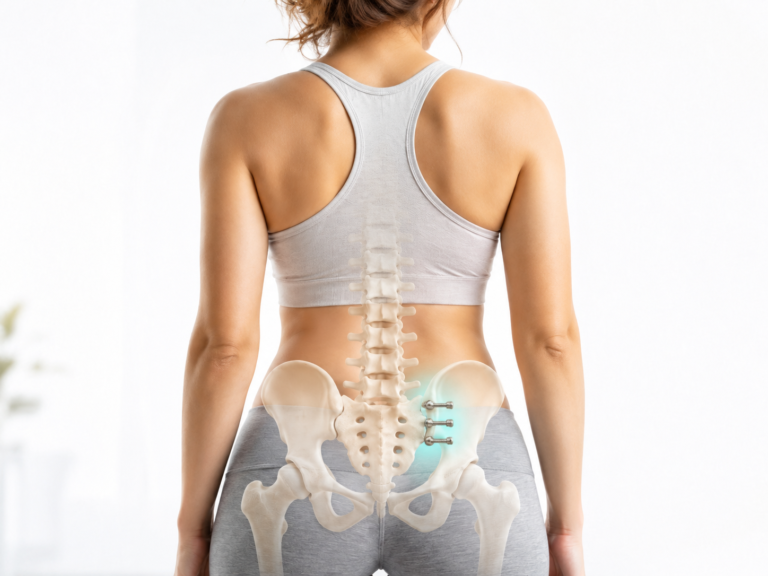
The sacroiliac, or SI, joints connect the lower spine to the pelvis. When one of these joints becomes damaged, inflamed, or unstable, it can cause persistent pain in the lower back, buttock, hip, or groin.
SI joint fusion is a minimally invasive procedure designed to stabilize the painful SI joint. Small implants are placed across the joint to reduce abnormal motion and promote long-term fusion.
This procedure may be considered when conservative treatments have not provided lasting relief and the SI joint has been identified as the source of pain.
Conditions That May Be Treated With SI Joint Fusion
SI joint fusion may be considered for patients with:
- Chronic sacroiliac joint pain
- SI joint dysfunction or instability
- Sacroiliitis
- Degenerative changes of the SI joint
- Persistent pain after previous lumbar fusion
- Traumatic injury involving the SI joint
Before recommending fusion, your physician will typically confirm that the SI joint is the likely source of your symptoms through your medical history, physical examination, imaging, and sometimes diagnostic SI joint injections.
Who Is a Candidate for SI Joint Fusion?
You may be a candidate if you have persistent SI joint pain that has not improved with conservative treatments such as:
- Activity modification
- Physical therapy
- Anti-inflammatory medications
- SI joint injections
- Other nonsurgical treatments
SI joint fusion is generally considered only after the SI joint has been identified as a significant source of the patient’s pain.

What Occurs During an SI Joint Fusion?
SI joint fusion is generally performed using a minimally invasive technique.
During the procedure:
- Anesthesia is administered for your comfort.
- A small incision is made near the affected SI joint.
- Fluoroscopy, or real-time X-ray imaging, is used to guide the procedure.
- Specialized implants are positioned across the SI joint.
- The implants help stabilize the joint and promote fusion over time.
- The incision is closed and covered with a dressing.
The exact technique and number of implants used will depend on your anatomy and the system selected by your physician.
FAQS
frequently asked questions
SI joint pain commonly occurs in the lower back or buttock and may extend into the hip, groin, or upper leg. Symptoms can sometimes resemble pain caused by the lumbar spine or hip.
Modern SI Joint Fusion can often be performed using minimally invasive techniques through a small incision. It is typically less invasive than traditional open fusion surgery.
Procedure times vary depending on the patient and technique used. Your physician can provide a more specific estimate based on your treatment plan.
Recovery varies from patient to patient. Some activity restrictions are usually necessary during the initial healing period, and the joint continues to fuse over time. Your physician will determine when you can return to work, exercise, driving, and other activities.
No procedure can guarantee complete pain relief. The goal of SI joint fusion is to stabilize a painful SI joint and reduce symptoms enough to improve function and quality of life.
Coverage varies by insurance plan and medical necessity requirements. Many insurers require documentation of conservative treatment, diagnostic testing, and confirmation that the SI joint is the source of pain before authorizing the procedure. Our office can help determine your benefits and authorization requirements.
